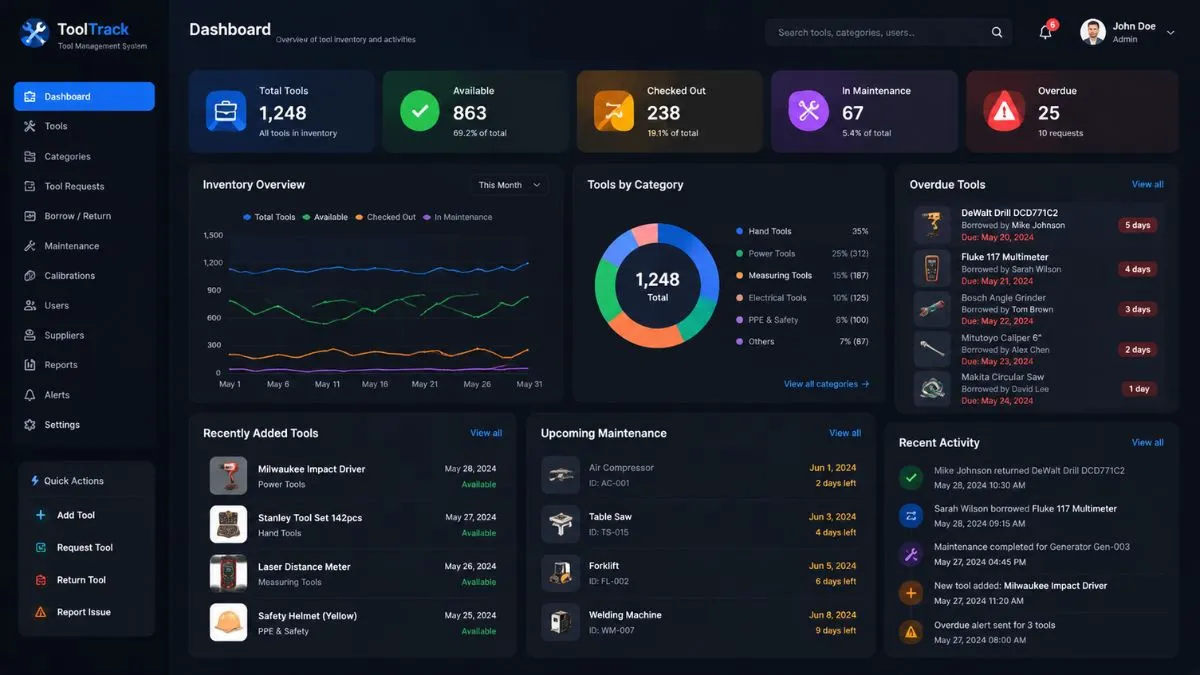
Based on how these projects are typically developed, a structured plan might look like this:
Define the Problem: Identify specific pain points. Is it manual record-keeping, tool misplacement, or lack of security? This defines the project’s scope.
Core Feature Selection (MVP): Start with the most essential features. A Minimum Viable Product (MVP) could be a simple web app with tool inventory and a check-in/out system.
Choose Your Tech Stack: Select technologies that align with your skills and goals. For a web-based system, options include the Python/Flask stack or the Java/Spring Boot stack for a more enterprise-grade solution.
Design User Flows: Map out how a user will interact with the system. For example:
A librarian/admin uses the dashboard to add new tools, generate QR code labels, and view lending records.
A workshop user scans their ID (or RFID tag) at a kiosk, scans the tool’s QR code to check it out, and repeats the process to return it.
Development & Testing: Build the system and perform thorough testing. For web apps, this includes System Integration Testing (SIT) and User Acceptance Testing (UAT). For hardware projects, it involves testing electronics and sensors.
Deployment: Deploy the application. Docker is a common tool for this, as it packages the app and its dependencies (like the database) for consistent running anywhere.